
How Arrest Warrants Work in Nacogdoches County
Under Texas Code of Criminal Procedure Chapter 15, an arrest warrant is a written order from a magistrate directed to a peace officer. A sworn complaint backs the request. The magistrate checks that the legal requirements are met before signing. Article 15.02 spells out what the document must contain: the accused person's name or a reasonably definite description, the alleged offense, and the magistrate's signature and office. The warrant itself authorizes the arrest. It stands apart from the complaint, an indictment, or any later court finding. In Nacogdoches County, felony and higher-court matters may run through the 145th or 420th District Court, while municipal or JP cases stay with the lower court holding them. Ask the clerk which court issued the order for your Nacogdoches County matter.
Nacogdoches County Complaint to Warrant Path
Chapter 15 also sets complaint requirements: the accused, the offense, probable-cause facts, time and place, and the affiant's signature. A magistrate may issue a warrant or, where allowed, a summons instead. The affidavit and the warrant are related papers, but they carry different roles and different access rules. Nacogdoches County's trial-court directory names the local courts and clerks, yet no public countywide arrest-warrant search exists. For your own matter, ask the issuing court or counsel how to confirm the file. A clean search result at some other court proves nothing about an order in Nacogdoches County.
Arrest Warrants: What They Contain
A warrant and the court file around it may show the issuing authority, the offense, a description of the person, the date, and directions to the officer. A Nacogdoches County clerk can explain which fields are public and which supporting papers stay restricted. Treat a booking screen as partial. It is not the full case file.
| Magistrate and court | Shows who issued the process and where the case is routed. |
|---|---|
| Person named | The document identifies the accused; do not use name alone when asking about a record. |
| Offense | States the alleged offense. It is not a final disposition. |
| Complaint or affidavit | Supports the probable-cause request; access can depend on the record type and status. |
| Service or recall status | Ask the issuing court or Sheriff’s Office what has been entered and when. |
Nacogdoches County Arrest Warrants Start in CID
Detectives at the Nacogdoches Police Department request arrest warrants after an investigation goes to the prosecutor, according to the department's Criminal Investigations page. That describes the local investigative route in Nacogdoches County, not a public lookup portal. The current NPD contact page lists 312 W Main St and 936-559-2607. The CID page offers no public warrant-search form. The official page covers the unit's investigative role only; it does not display warrant records or any person's case. Read the NPD Criminal Investigations page for the department's own explanation.
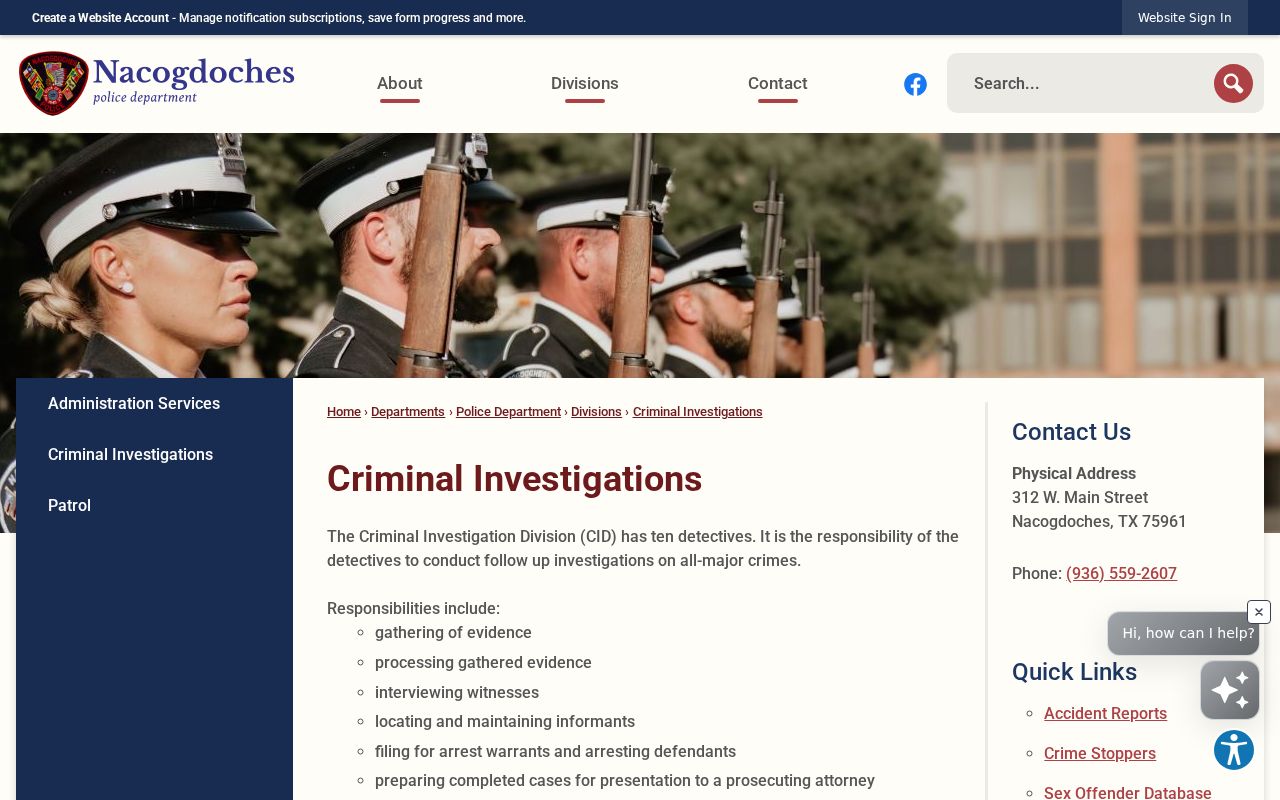
If a matter involves NPD, reach the department through its official site. For court status in Nacogdoches County, confirm with the issuing clerk.
How Warrants Get Served in Nacogdoches County
Once signed, a warrant is directed to a peace officer for service. In Nacogdoches County, the Sheriff's Office lists court security, service of process, accepting bail for prisoners in custody, and jail operations among its duties, and constables also serve process. Serving an order does not make that office the issuing court, and only the court controls a recall. NCSO's records contact is records@nac-sheriff.com; the office phone is 936-560-7794, and the jail phone shown in official materials is 936-560-7783. Ask the issuing court about warrant status. Ask the jail about custody or release. A bond figure on a roster is not a court quote and promises nothing about release.
Arrest Warrants, Summonses, and Bench Warrants
These orders do different jobs. A summons tells a person to appear. An arrest warrant commands an officer to take someone into custody. A bench or FTA warrant ties back to a missed court event in Nacogdoches County. The exact document and its issuing court matter far more than a broad label on some unofficial page.
| Process | Why it may issue | First official contact |
|---|---|---|
| Arrest warrant | Magistrate action after sworn complaint and probable-cause review. | Issuing court or clerk. |
| Summons | Notice to appear where permitted. | Court listed on the notice. |
| Bench or FTA warrant | Missed required court date or other lower-court process. | Municipal or JP court that set the case. |
Payment, recall, and appearance rules can differ by court and charge.
Nacogdoches County Federal Warrants Route to Lufkin
Federal matters from Nacogdoches County land in the Lufkin Division of the U.S. District Court for the Eastern District of Texas. The Ward R. Burke U.S. Courthouse sits at 104 N Third Street, Lufkin. The court posts public hours Monday through Friday, 8 a.m. to 5 p.m., with a clerk contact at 936-632-2739. The court's own Lufkin location page sets out the jurisdictional boundary for Nacogdoches County cases; it is not a county warrant search. See the Eastern District's Lufkin courthouse information. Federal docket access runs through PACER, which is separate from local county and municipal case systems.
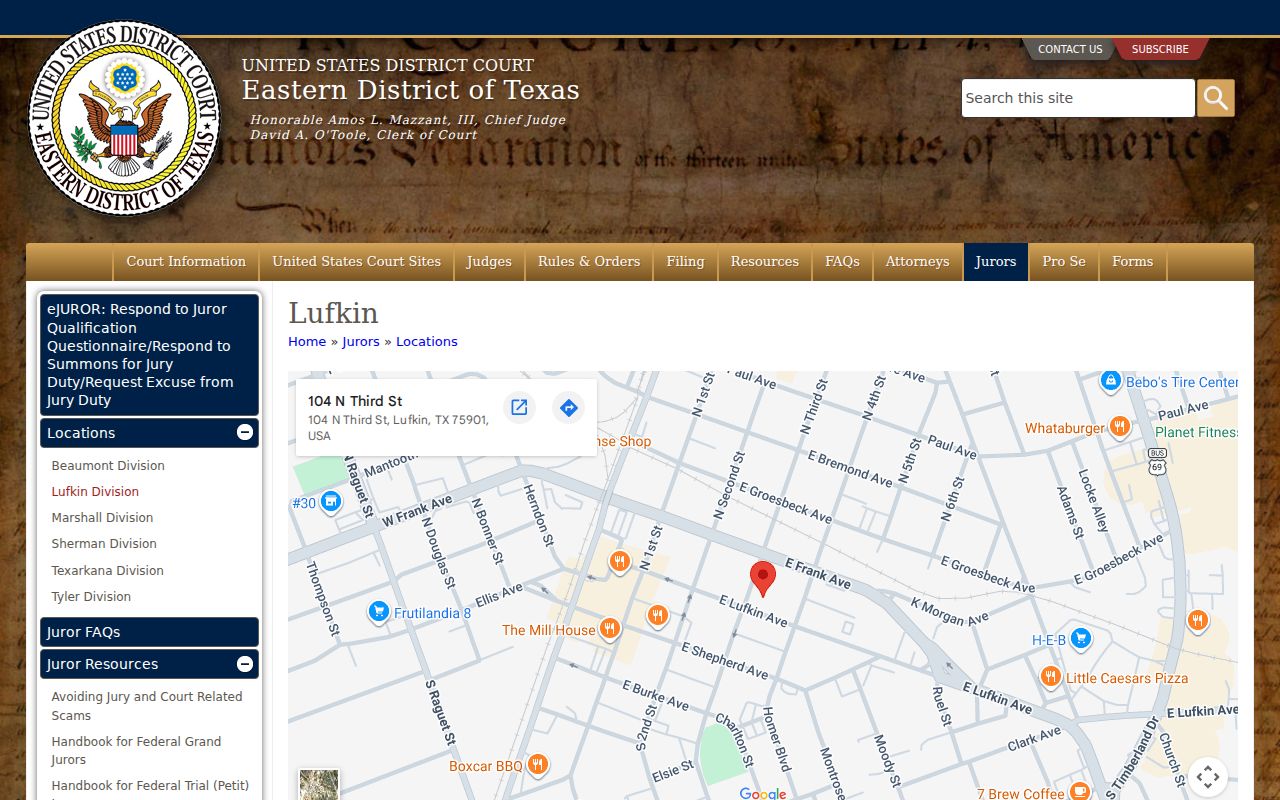
If a document names a federal court, follow that clerk or attorney route rather than the NCSO roster for your Nacogdoches County matter.
Checking Sealed or Juvenile Materials
Public access is not the same for every warrant. Texas OCA's open-records policy describes access to arrest warrants and supporting affidavits, but limits can apply. Search-warrant affidavits follow Chapter 18 rules, including timing tied to execution and possible sealing. Family Code Chapter 58 protects child arrest warrants in Nacogdoches County and elsewhere, along with the underlying complaints or affidavits.
Ask before expecting a copy: identify the issuing court and document. The clerk can explain what is open, sealed, redacted, or confidential.
Texas OCA open-records policy · Code of Criminal Procedure Chapter 18 · Family Code Chapter 58
A public roster also leaves out anyone under 17. Do not read absence from a Nacogdoches County tool as confirmation on a juvenile matter.
Handling an Arrest Warrant in Your Name
If you believe an arrest warrant carries your name, call a licensed Texas attorney and the issuing court before you act. Ask what exact order sits in the file. Ask whether it is still active. Ask whether counsel should arrange a voluntary appearance, bond, or a motion to recall. The court and your attorney can explain the route that fits a Nacogdoches County case.
Safety: Do not approach another person named in a wanted listing. If a listing may concern you, use an attorney and official court contact to confirm it.
Need the full picture on your case? The Nacogdoches County resolution overview sorts out court status, custody, and records requests step by step. One caution: a warrant stays enforceable even when no website shows it.
Request Nacogdoches County Arrest Records
Arrest records in Nacogdoches County sit with different offices depending on the court. District-court criminal files belong to the District Clerk, reachable at 101 W Main, Room 120, or 936-560-7740. County-court records go through the County Clerk or the court itself. Law-enforcement records held by the sheriff can be requested from NCSO at records@nac-sheriff.com, and the county's online Public Information Request form works for county-held documents. When you write, describe the record, the office, a case number, and an approximate date. Chapter 552 of the Texas Government Code carries exceptions, so an active investigation, a juvenile case, or sealed paper may be off limits. Also know the limits. A records request cannot make the county build a new all-courts warrant list.